
On this page
- What can be fixed at the roadside, and what needs the shop?
- How far does the service truck go?
- What should a driver tell dispatch when calling?
- Do road calls cover fleet trucks?
- How does a road call get billed?
- What happens after dark and at weekends?
- Which trucks and road-call jobs does the shop cover?
- Road call, tow or drive it in: which fits?
- Road calls
- How does a road call work?
- Questions
What can be fixed at the roadside, and what needs the shop?
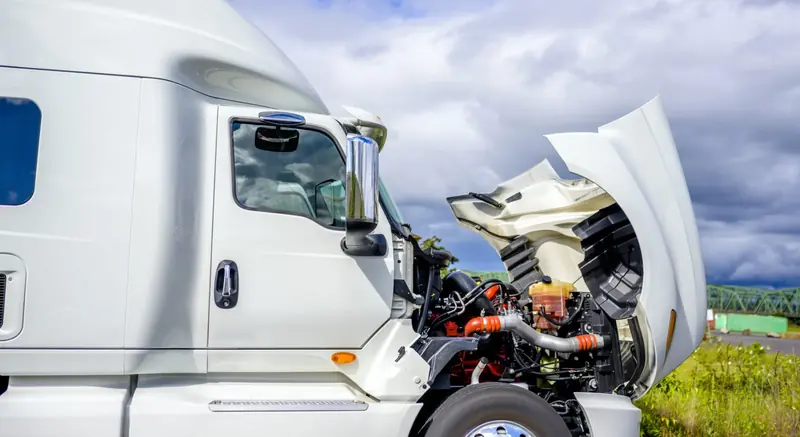
A job can usually be done at the roadside when the part fits in a service truck and the mechanic can reach it without a lift. Work that means pulling a heavy component, running long diagnostic tests or waiting on parts goes to the shop.
Road-call jobs customers describe in their Google reviews:
- A no-start fixed with three new batteries
- An alternator belt problem fixed
- Two drive tires changed and a third patched
- A compressor governor fixed on a cold day
- A brake chamber fixed
- A fuse box problem sorted out
- A water pump replaced
- A coolant leak from a bunk heater core, bypassed so the truck could run
- Fuel filters replaced and the fuel system primed after a truck stalled
They young man came out to where I was broke down found out what was wrong with my truck in just a matter of minutes.. told me he had to go get the part .he left little while later he showed back up .. … when he got back he had my truck fixed in about 30 to 45 mins .. he done a great job
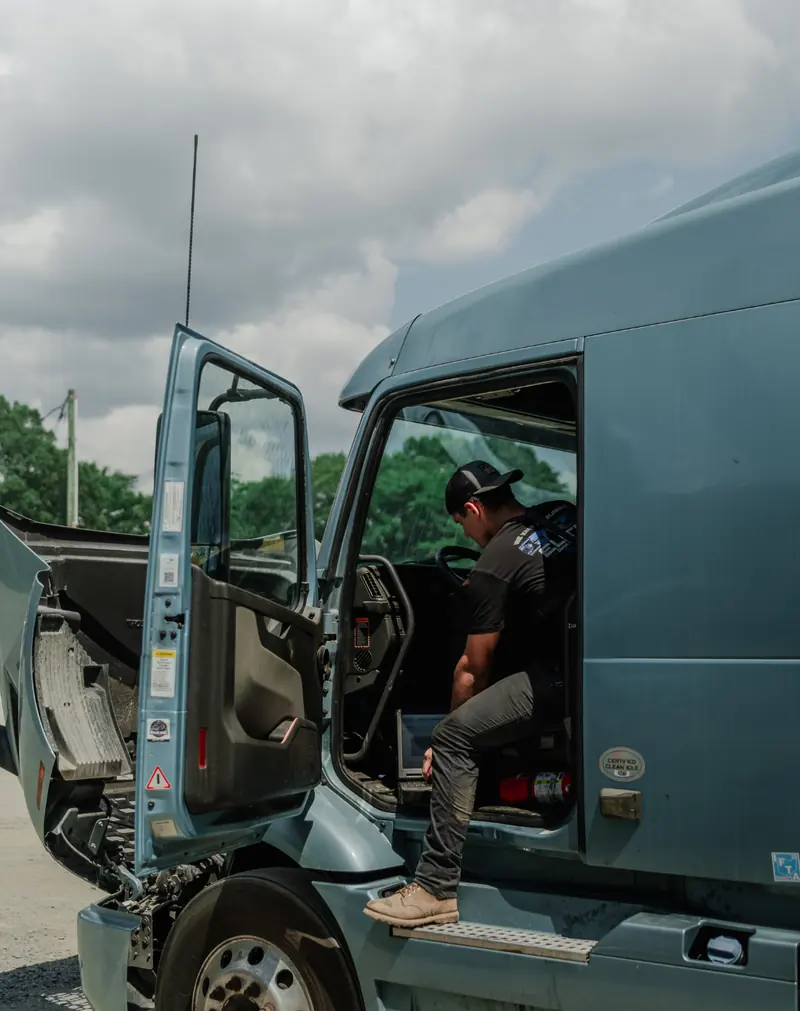
Clutches, transmissions, overhauls and faults that need hours of testing are shop work. A fault that keeps coming back after a roadside fix usually needs truck diagnostics in a bay, where the truck can be run and tested properly.
The service trucks carry tires, or the mechanic picks them up at the shop on the way. When a truck cannot be fixed where it stopped, the shop can tow it in.
How far does the service truck go?
Up to about an hour's drive from the shop. Farther is possible, but rare. Road calls go out day or night, weekends included, and the shop has 4 service trucks for them.
When a service truck is free, it usually reaches a truck 30 minutes away in 45 minutes to an hour, and on a busy day it takes longer.
Reviews describe road calls in the Charlotte area.
My truck was disabled in the middle of independence blvd. The got my truck started, we drove back to the shop when they found the issue on my truck.
The shop sits between Matthews and Monroe, a short run from I-485 and US-74. A service truck loaded with tools and parts is slower than a car, and I-485 at rush hour is slower still.
Trucks also stop at scales. The nearest North Carolina weigh station is on I-85 southwest of Charlotte, and South Carolina's York and Rock Hill scales sit on I-77. A driver stopped at one should give the scale's name and the direction of travel when calling.
Sources: NCSHP weigh stations · SCDPS truck parking
What should a driver tell dispatch when calling?
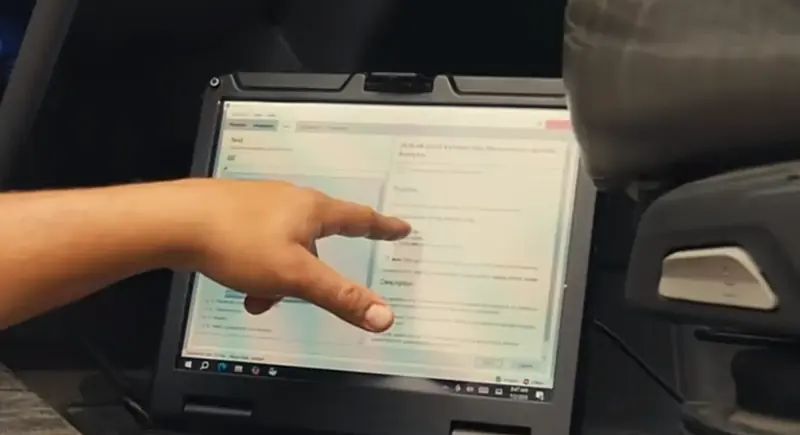
Where the truck is, which truck it is, what it is doing and any fault code on the dash. The more of this the first call carries, the better the mechanic can pack for it.
- Location. The road, the direction of travel and the nearest exit or mile marker, or a landmark such as the Pilot truck stop in Monroe. A location pin from the driver's phone helps.
- The truck. Unit number, make, model and year, and the VIN if it is handy.
- What happened. Won't start, lost power, air pressure dropping, coolant on the ground, a flat tire, a smell or a noise, and when it started.
- Codes. Any warning light or fault code on the dash. On most trucks the code reads as an SPN and an FMI number.
- Where it is parked. On a shoulder, a ramp or a lot, loaded or empty, and whether the driver is safe.
- Who approves the repair. The driver, the owner or a fleet manager, with a phone number.
Do road calls cover fleet trucks?
Yes. Fleets call the shop for whatever their trucks need, and a fleet truck stopped on the road gets a road call like any other. The shop runs 55 trucks of its own, local and regional, so it knows what a truck off the road costs.
Reviews from fleets describe it. One fleet owner's truck went down in the middle of a highway and was fixed and back on the road, and the shop's owner kept the fleet owner informed the whole time. Another fleet's truck broke down because of an air bag on its trailer, and of the places the owner called, this was the one with someone who could help.
For planned work, such as PM on the schedule a fleet sets and DOT annual inspections, see fleet maintenance.
How does a road call get billed?
By the hour, with a two-hour minimum, plus parts. Ask for the rate when you call.
A fleet customer wrote that the owner came through with a reasonable price for the road call and parts. A driver who broke down in rush hour wrote that the charge was very reasonable next to what roadside calls usually cost.
Before the service truck leaves, it helps to agree who approves the work and who pays: the driver at the truck, the owner by phone, or a fleet on account.
The shop takes check, card, cash, Zelle, Apple Pay and Cash App, and fleet accounts get net 30 to 45 terms.
What happens after dark and at weekends?
The shop is open 24 hours a day, 7 days a week, and the phone is answered at any hour. The shop phone rings the owner's cell, and Dennis answers it himself, evenings and weekends included. Road calls go out day or night.
Reviews describe the shop coming out to a truck that stalled on the side of the road on a Saturday to replace its filters and prime it, and a mechanic knocking on a driver's door at 7:00 in the morning to fix a truck.
If a truck is stopped now, call (980) 313-6059.
Which trucks and road-call jobs does the shop cover?
Road calls cover the same trucks and makes the shop works on in its bays. The ones customers describe in reviews were semi trucks and fleet trucks stopped on highways and city streets, with electrical, cooling, fuel, tire and air system faults.
Road-call jobs in reviews
Where trucks stopped, as reviews put it
Nearby corridors
Road calls go out up to about an hour's drive from the shop, which takes in stretches of all five.
Trucks road calls cover
Truck makes
The shop behind the road calls
- Service trucks for road calls
- 4
- Phone answered
- 24/7
- Trucks we run ourselves
- 55
- In trucking since
- 2013
Road call, tow or drive it in: which fits?
Which one fits depends on the fault, where the truck stopped and whether it can move safely.
| Option | When it fits | What happens | What to check first |
|---|---|---|---|
| Road call | The fix is a part a mechanic can carry and fit at the truck: a battery, a belt, an air line, a filter, a tire | A mechanic drives to the truck with tools and parts and repairs it where it stopped | That the truck is up to about an hour's drive from the shop. The phone is answered 24 hours a day |
| Tow to the shop | The truck can't be made safe to drive, or the job needs a lift, a heavy part or long testing | The shop tows the truck in for repair in a bay | Call the shop first and describe the fault |
| Start it and drive in | The truck runs and is safe to move, but the fault needs the shop to find | The truck is driven to the shop and diagnosed in a bay | Brakes, steering, lights and warning lamps have to be safe for the road |
Road calls
A truck that wouldn't start first thing in the morning
- What failed
- The driver couldn't start the truck at 7:30 in the morning, and found Elite Diesel at about 7:40.
- What we did
- A mechanic was at the truck by 8:10, found the problem and put in three new batteries. The driver was back on the road at 9:15.
An alternator belt on a road call
- What failed
- A truck out on the road had a problem with its alternator belt.
- What we did
- A mechanic came out, did the job, made sure the truck was running fine and left. The customer wrote that the price for the road call and parts was reasonable.
Drive tires at the roadside
- What failed
- An owner-operator's truck needed two drive tires changed and a third patched.
- What we did
- Two drive tires were changed and the third was patched at the roadside. The owner-operator wrote that it was done in a timely manner and very professionally.
How does a road call work?
The usual steps from a phone call to a truck rolling again.
The call
The driver or dispatcher calls (980) 313-6059 with the location, unit number, symptoms and any fault code.
Talking it through
The symptoms and any fault codes are talked through on the phone, so the mechanic can bring the parts the fault most likely needs.
The mechanic goes out
A mechanic heads out in one of the shop's 4 service trucks, with tires on board when a tire is the problem.
Find the fault
The mechanic confirms the fault at the truck before parts go on. If a part is not on board, the mechanic goes to get it.
Repair and check
The truck is run and checked before the mechanic leaves.
Invoice
The road call is billed by the hour, with a two-hour minimum, plus parts.
The phone is answered 24 hours a day, and road calls go out day or night, weekends included.
Questions
Do you send a mechanic to trucks broken down in Charlotte?
Yes. The shop at 225 Garmon Rd Ste K in Indian Trail is about 30 minutes by car from uptown Charlotte, and road calls go out day or night, weekends included, to trucks up to about an hour's drive away. Reviews describe road calls in the Charlotte area, including one on Independence Boulevard.
What should a driver have ready when a truck stops in Union County?
The location, with the road, direction and nearest exit or landmark. The unit number, what the truck is doing, any fault code on the dash, and who approves the repair. Then call (980) 313-6059, which is faster than the form when a truck is stopped.
Should a truck that breaks down near Monroe get a road call or a tow to Indian Trail?
A road call fits when the fix is a part a mechanic can carry, such as a belt, a battery, filters or a tire. A tow fits when the truck can't be made safe to drive or the job needs a lift or long testing, and the shop can tow it in. Describing the symptoms on the phone helps decide which.
How is a road call near Matthews billed?
By the hour, with a two-hour minimum, plus parts. Ask for the rate on the phone before the service truck leaves, and say who approves the work and who pays.