On this page
- Why does a DPF plug, and how often should it be cleaned?
- Clean or replace: how do you decide?
- What do DEF and SCR faults look like?
- What does a forced regen fix, and what doesn't it?
- Do you repair EGR valves, EGR coolers and exhaust leaks?
- Which aftertreatment and exhaust parts do you work on?
- Forced regen, DPF cleaning or DPF replacement: when does each apply?
- An aftertreatment job
- How does a DPF or DEF job move through the shop?
- Questions
Why does a DPF plug, and how often should it be cleaned?
A DPF traps soot from the exhaust and burns it off during regeneration, but the ash left behind by engine oil additives does not burn, so every filter eventually needs its ash cleaned out.
Soot builds faster when the exhaust never gets hot enough to burn it off on the move. Trucks that idle, run short trips or stop and start all day regen more often than trucks on long highway runs, and engine makers shorten their cleaning intervals for that kind of severe service.
Signs a filter is loading up:
- A DPF or regen lamp that keeps coming back
- Regens running more often than they used to
- Lost power, higher fuel use or a derate
- A high reading from the DPF differential pressure sensor
A good rule is to clean at the engine maker's interval for the truck's duty cycle, and sooner when regens start coming more often.
Clean or replace: how do you decide?
A filter that is loaded with ash and soot but still sound gets cleaned. One that is cracked, melted or damaged on its face gets replaced.
Either way, the question that matters is why the filter loaded up. A leaking injector, an oil-seeping turbo seal, coolant from an EGR cooler or a sensor that stops regens from finishing will plug a clean filter again, so the cause gets fixed first.
Faults like those are diesel engine repair work, and finding them starts with truck diagnostics.
Filters are cleaned in-house at the shop in Indian Trail, not sent out to a cleaning service.
What do DEF and SCR faults look like?
A warning lamp and a fault code come first, and a derate follows if the fault isn't fixed.
The SCR system sprays DEF into the exhaust ahead of a catalyst that breaks down NOx. Faults usually trace to one of these parts:
- The DEF doser, which can clog with crystals
- The DEF pump or the tank and line heaters
- The urea quality sensor, which reads whether the fluid is right
- The inlet and outlet NOx sensors, which tell the engine whether the system is working
- Contaminated or diluted DEF in the tank
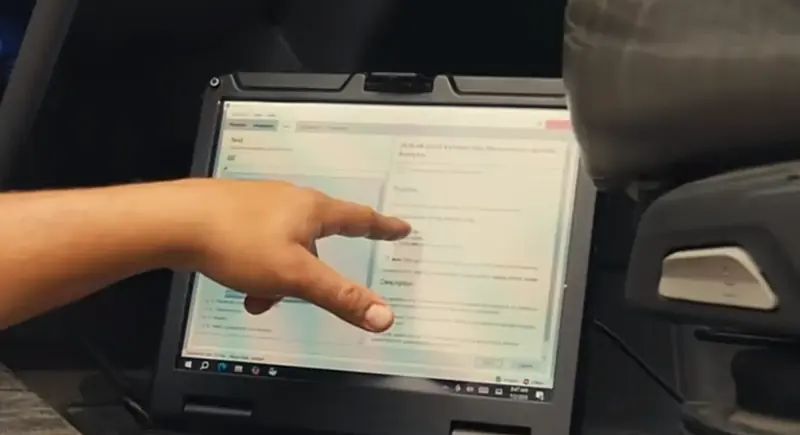
The rules on DEF derates are changing. In 2025 EPA asked engine makers to soften DEF derates on existing trucks, and in March 2026 it said approved NOx-sensor software updates can be installed on existing engines without being treated as tampering.
Removing DEF derates on newly manufactured engines is a proposal dated July 9, 2026. It is proposed, not in effect.
Sources: EPA 420-F-26-006 · EPA 420-F-26-012
What does a forced regen fix, and what doesn't it?
A forced regen burns off built-up soot when the truck couldn't finish a regen on its own. It does not remove ash, repair a cracked filter or fix whatever stopped the regen in the first place.
It is the right first step when soot is the problem and the filter is sound.
It is the wrong fix when:
- The filter is full of ash, which only cleaning removes
- A pressure or temperature sensor is giving the engine bad readings
- On engines that have one, the fuel doser for active regens is clogged or leaking
- The filter is so loaded that a hot regen could overheat and damage it
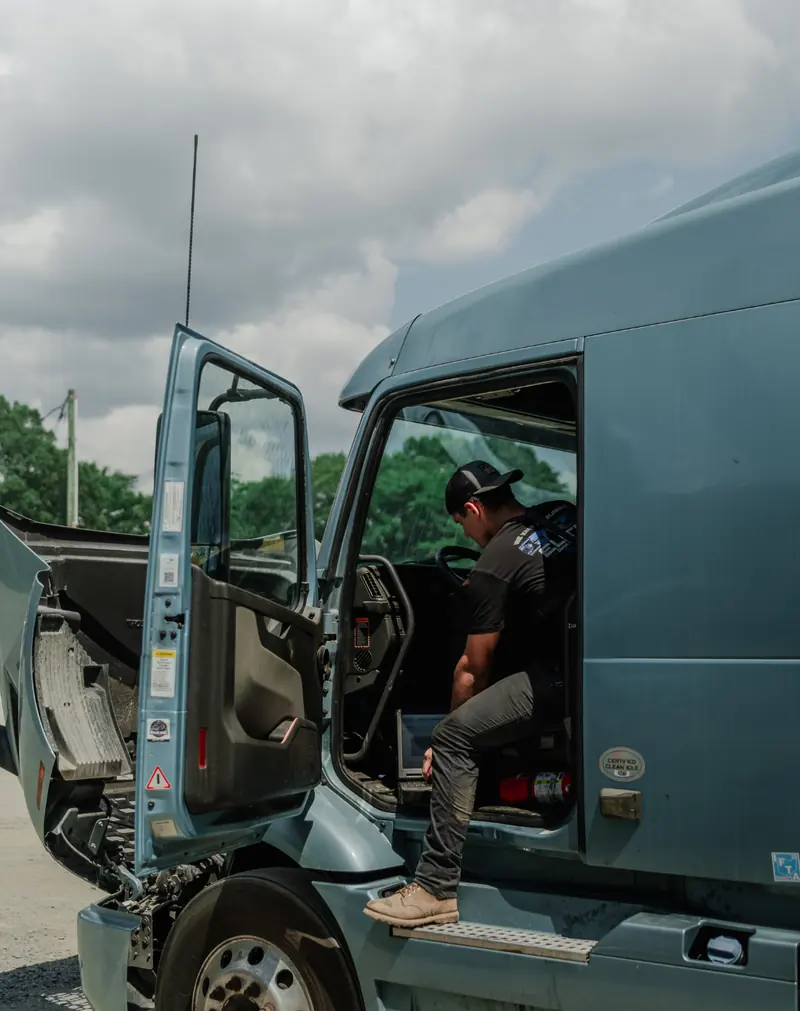
A truck that needs forced regens again and again has a fault to find. At the shop, forced regens are run and aftertreatment faults are read with heavy-duty diagnostic software that covers the major makes.
Do you repair EGR valves, EGR coolers and exhaust leaks?
Yes. EGR valves, EGR coolers and exhaust leaks are repaired at the shop, along with the DPF, DEF and SCR parts downstream.
The EGR system sends some exhaust back into the intake to cool combustion and cut NOx. The valve meters it on the engine computer's command, and the cooler uses engine coolant to take the heat out. When it fails, it usually shows up as:
- A valve stuck open: black smoke, lost power, and soot that loads the DPF faster
- A valve stuck shut or a cooler clogged with soot: EGR flow or NOx fault codes
- A leaking cooler: coolant loss with no leak on the ground, or white smoke from the exhaust
A leaking cooler costs more than the coolant: coolant carried into the exhaust fouls the DPF, which is why a filter that keeps plugging gets the EGR cooler checked.
An exhaust leak ahead of the filter lets out heat the DPF needs to burn soot off. It often shows as soot streaks around a joint, a tick on a cold start or exhaust smell in the cab.
Which aftertreatment and exhaust parts do you work on?
A modern diesel truck's exhaust runs through a diesel oxidation catalyst, the DPF and an SCR catalyst dosed with DEF, and most engines also route some exhaust back through an EGR valve and cooler. The shop repairs all of these parts in-house, on Cummins, Detroit, PACCAR, Volvo, Mack and International engines, along with the exhaust piping and sensors around them.
Exhaust aftertreatment
DEF system
EGR
Exhaust
Regeneration
Engines
The shop behind the work
- Where filters are cleaned
- In-house
- Technicians
- About 20
- Trucks we run ourselves
- 55
- Warranty
- 1 to 3 years, by part
Forced regen, DPF cleaning or DPF replacement: when does each apply?
A plugged or failing DPF gets one of three fixes. The fault codes, the pressure readings and a look at the filter decide which.
| Fix | When it applies | What it does | What it does not fix |
|---|---|---|---|
| Forced regen | Soot built up because the truck couldn't finish regens in normal driving, and the filter is sound | Raises exhaust temperature with the truck parked, from a service tool, to burn the soot off | Ash, a failed sensor, a clogged doser or a cracked filter |
| DPF cleaning | Ash has reached the engine maker's cleaning limit, or regens no longer bring the pressure reading back down | The filter comes off the truck and the ash and soot are cleaned out in-house at the shop | Cracks, melted spots or a damaged face, or the engine fault that loaded it |
| DPF replacement | The filter is cracked, melted or damaged, or cleaning no longer brings it back | A new or remanufactured filter goes on after the cause of the damage is repaired | The upstream fault, unless it is found and fixed first |
An aftertreatment job
A DEF system problem that kept a truck going into derate
- What failed
- The truck had a problem with its DEF system and kept going into derate.
- What we did
- Staff took care of the DEF system problem, and the truck is running smooth.
How does a DPF or DEF job move through the shop?
The usual steps from the first fault code to a truck back in service.
Codes and history
The warning lamps, the fault codes and how often the truck has been regenerating come first.
Diagnosis
Fault codes and live data are read with heavy-duty diagnostic software, and sensor readings are checked before a part is replaced. Diagnosis is a flat diagnostic fee, quoted when you call.
Find the cause
Injectors, turbo, EGR cooler and sensors are checked for whatever loaded the filter, so a clean filter is not plugged again.
Estimate and approval
The estimate is approved before work starts.
Clean, repair or replace
Filters are cleaned in-house, and failed parts are repaired or replaced at the shop.
Test before release
A regen is run and the codes are rechecked before the truck goes back into service.
Cleaning, diagnosis and repairs are all done in-house at the shop in Indian Trail.
Questions
Do you clean DPFs at the Indian Trail shop, or send them out?
They are cleaned in-house at the shop, not sent out, and the DEF, SCR, EGR and exhaust repairs are done at the same shop. A filter that plugs again soon after cleaning often points to a problem upstream, such as a leaking injector, a turbo seal or an EGR cooler, so that gets checked too.
Can a truck in DEF derate near Charlotte be driven to the shop?
It depends how far the derate has gone. Early stages cut power, and later stages can hold speed down hard, so a long run on I-485 may not be practical. Call (980) 313-6059, answered 24 hours a day, with the fault codes and how long the lamp has been on. A road call can read the codes where the truck sits, day or night, and a truck that can't be driven in can be towed in.
Do Union County trucks still need working DEF systems?
Yes. Trucks built with SCR systems still need DEF, and the system still has to work. What is changing is how hard the derate hits: EPA has asked engine makers to soften DEF derates on existing trucks, and removing them on new engines is only a proposal. A DEF fault still needs fixing.
Does a plugged DPF on a Matthews-area truck always need replacing?
No. A filter loaded with ash and soot but still sound gets cleaned, and only a filter that is cracked, melted or damaged on its face needs replacing. Which one it is usually shows once the filter is off the truck and both faces can be looked over.
How often should a DPF be cleaned on trucks running short routes around Monroe?
At the engine maker's severe-service interval, and sooner if regens start coming more often. Engine makers publish maximum cleaning intervals, and severe service shortens them, because short routes and long idling keep the exhaust too cool to burn soot off on the move.